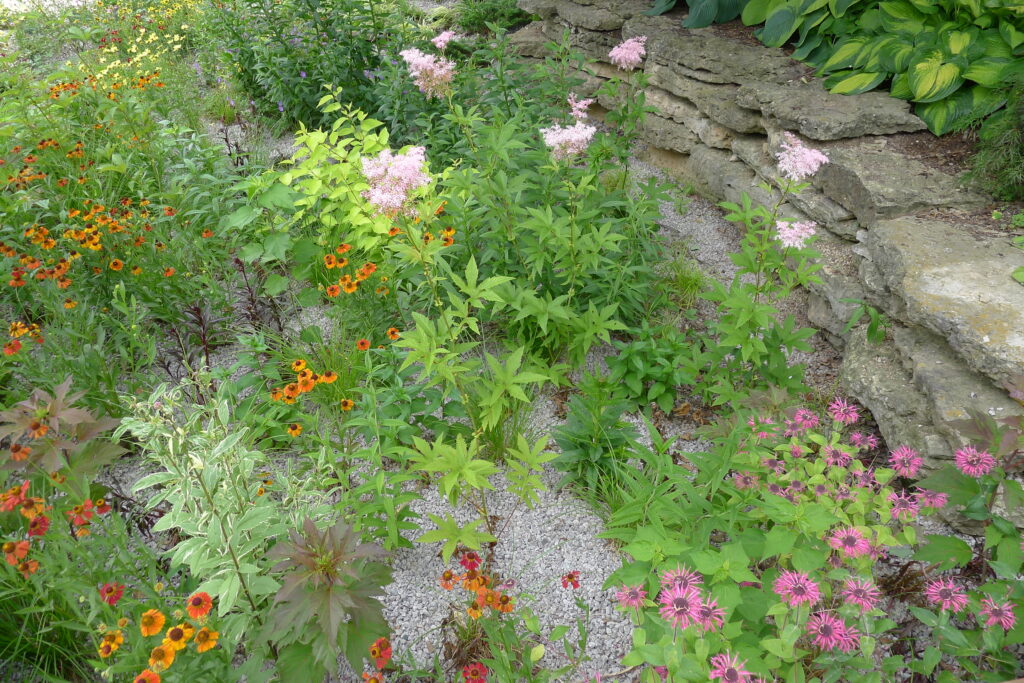
Quick answer: There is no universally cheapest yard drainage solution. Swales convey water above ground; buried systems collect or convey water underground; rain gardens temporarily hold runoff for infiltration or filtration. Some designs combine these approaches. Compare proposals only after they identify the water source, soil conditions, receiving area and complete installation scope. A buried pipe still needs a suitable destination, and a rain garden may need an underdrain where infiltration is slow. (fairfaxcounty.gov)
This guide is for U.S. homeowners comparing drainage work. No national dollar range is offered: the evidence here does not establish comparable local installation prices. Request local estimates in U.S. dollars for a defined scope rather than treating different drainage systems as interchangeable purchases.
1. Compare what each drainage proposal actually does
Start with function, not the product name. A proposal to move surface runoff across a yard is not equivalent to one intended to collect water within the soil.
| Approach | Main function | Scope questions to ask |
|---|---|---|
| Swale | A shallow surface channel conveys runoff. Engineered vegetated swales can also filter or infiltrate water. | Does the price cover basic reshaping and turf, or engineered soil, planting and an underdrain? |
| Buried drainage | Depending on its design, collects water below ground or carries collected surface water elsewhere. | What collects the water, what pipe is specified, and where does it discharge? |
| Rain garden | A planted depression temporarily stores runoff, allowing infiltration or filtration through soil media. | Does the design rely on native soil, or include replacement media, an underdrain and an outlet? |
These distinctions matter because a simple grass channel and an engineered dry swale can have substantially different components. Likewise, rain gardens with and without underdrains manage captured water differently. Ask each bidder to explain the proposed system in plain language. (fairfaxcounty.gov)
Do not assume that hiding the system underground makes it more complete. Your comparison should follow water from its source through collection, conveyance or storage to its final receiving area.
2. Document the problem before requesting a solution
Prepare the same short project brief for every bidder. Include photographs taken safely during or after rain, the affected areas and a description of when the problem occurs.
Useful observations include:
- Does water arrive visibly across the surface?
- Is the issue associated with a downspout, paved area or particular storm?
- Does the soil remain wet between storms?
- Has the problem changed since paving, planting, fencing or neighboring construction?
- Is the concern an unusable lawn, erosion, water near a building, or several problems together?
These observations are clues, not a diagnosis. Northern Virginia’s conservation district distinguishes runoff from high-groundwater conditions; both can produce wet yards, but they are not the same problem. (fairfaxcounty.gov)
Ask the assessor to explain what additional information is needed before pricing: elevation measurements, soil investigation, infiltration assessment, drainage-area information or review of existing plans.
For foundation leakage, persistent unexplained saturation, steep terrain or work affecting existing drainage infrastructure, request an explanation of whether a qualified drainage designer, civil engineer or other appropriately licensed professional is needed. Make that a scope decision before accepting an installation-only bid.
3. Check soil and infiltration before budgeting a rain garden
A rain garden is not simply a flower bed placed in the wettest part of the yard. University of Minnesota Extension advises considering its location, contributing runoff, soil and plants together. Its Minnesota homeowner guidance uses drainage within 48 hours as a suitability check. That is regional guidance—not a substitute for your jurisdiction’s design criteria. (extension.umn.edu)
Ask whether the proposal includes an infiltration assessment at the intended location. Also ask what happens if the results do not support the proposed design.
Do not confuse a plant-soil test with an infiltration assessment. A nutrient or pH report addresses different questions from how readily water moves through the ground. Fairfax County’s drainage glossary treats soil testing and infiltration separately. (fairfaxcounty.gov)
Slow infiltration can change the project from a relatively straightforward planted basin into a system with engineered media and an underdrain. The Minnesota Stormwater Manual explains that underdrains facilitate drainage where underlying soils cannot absorb water quickly enough. That introduces additional components and an outlet question. (stormwater.pca.state.mn.us)
Before authorizing work, ask:
- What soil and site evidence supports this approach?
- Are replacement soil and off-site disposal included?
- Does the design need an underdrain?
- What is the locally appropriate drain-down criterion?
- What happens when runoff exceeds the system’s intended capacity?
Plant selection should follow regional conditions and the garden’s wetter and drier zones, rather than a generic national planting list. (extension.umn.edu)

4. Resolve the receiving area and local approvals first
“Move water away from the house” is not a complete drainage scope. Ask where the water will go and how the designer has established that the receiving area is suitable.
A suitable outlet must be capable of receiving redirected runoff without creating erosion, sogginess or another problem. A property boundary is not, by itself, an acceptable destination. (fairfaxcounty.gov)
Before signing, ask your local stormwater or development office which checks apply to the proposed work:
- Grading or land-disturbance approval.
- Work within drainage or utility easements.
- Connections to public stormwater infrastructure.
- Floodplain, stream-buffer or other protected-area review.
- Restrictions on altering existing drainage patterns.
For example, Fairfax County, Virginia, directs homeowners considering drainage measures to check utility locations, easements and protected areas; some practices also require floodplain or permit review. These are local examples, not nationwide permit rules. (fairfaxcounty.gov)
Request written responsibility for approvals, fees and utility-location coordination. Do not accept an assumed public connection or an unspecified outlet as a detail to resolve after excavation starts.
5. Ask for a complete installation and restoration scope
Use a shared checklist when requesting estimates. The FTC recommends multiple written estimates describing the work, materials, completion date and price, and advises asking why estimates differ substantially. (consumer.ftc.gov)
For drainage work, request separate descriptions of:
- Assessment and design: site measurements, testing, drawings and review.
- Access and protection: equipment access, work limits and protection of retained landscaping.
- Earthwork: excavation, grading, imported material and surplus-soil disposal.
- System components: channels, collection points, pipe, media, planting and outlet work, as applicable.
- Construction protection: erosion prevention and sediment controls.
- Restoration: lawn, beds, paving, irrigation and access-route repairs.
- Handover: records, maintenance instructions and agreed completion checks.
Treat this as a bid-request template, not a claim that every project needs every item.
Temporary construction protection deserves its own discussion. Minnesota’s stormwater guidance explains that perimeter controls help keep sediment from leaving disturbed sites, while preventing erosion through stabilization is preferable where feasible. Ask what protects exposed soil during work and what stabilizes it afterward. (stormwater.pca.state.mn.us)
Finally, distinguish included work, allowances, optional work and exclusions. Ask how uncertain conditions will be priced and approved. Avoid counting an allowance twice when building your comparison total.
6. Worked comparison: two hypothetical yards, different budget priorities
The following sites are hypothetical. They illustrate how to compare scope, not how to design a drainage route or predict a price.
Site A: Open lawn with visible surface runoff
Assume runoff crosses an accessible lawn during storms. One proposal offers a grassed swale; another offers buried collection and piping.
Do not rank them by the lowest total immediately. Ask both bidders to address the same runoff source, receiving area and restoration standard.
For the swale proposal, request clear work limits, finished-surface treatment and establishment responsibilities. For the buried proposal, request collection details, pipe specifications, inspection access and outlet work.
The budget decision is whether each approach addresses the documented problem with an acceptable yard layout—not whether pipe appears more substantial than reshaped ground.
Site B: Constrained yard with slow infiltration
Assume the yard has established beds, restricted equipment access and an infiltration assessment that does not support a simple infiltration-only rain garden.
One proposal includes a planted basin with replacement media and an underdrain. Another proposes buried drainage. A third offers only excavation and planting.
The third proposal is not yet comparable: it needs to explain how the slow-infiltration finding is addressed. Underdrained rain gardens have additional drainage components, rather than relying solely on absorption into native soil. (stormwater.pca.state.mn.us)
For the other proposals, request confirmation of access costs, disturbance, disposal, outlet work and restoration.
Use this comparison structure with actual local quotes:
Comparable upfront scope = quoted price + necessary excluded work + separately purchased design or approvals + omitted restoration.
Keep optional aesthetic upgrades separate. Mark an unpriced essential item “unresolved”, rather than assigning it a guessed amount.
This method will not identify a winner until the missing information is supplied. That is useful: it exposes uncertainty before you commit money.
7. Include maintenance and completion checks in the decision
Drainage work does not end when the excavation is filled.
Vegetated swales need maintenance appropriate to their design, such as mowing or planting care, debris removal and inspection of overflow components. Rain gardens need attention to inlet blockage, sediment, weeds and plant health. Grated trench drains require debris removal. (fairfaxcounty.gov)
Ask each bidder for a task list identifying what the homeowner can reasonably maintain, what requires service access and what symptoms should trigger a professional inspection.
Before accepting completion, request a walkthrough covering:
- The installed system and its receiving area.
- Accessible collection points, grates and inspection locations.
- Restored lawn, beds and other disturbed surfaces.
- Establishment watering and planting responsibilities.
- Maintenance instructions and warranty exclusions.
- The process for reporting concerns after rainfall.
Avoid three comparison mistakes: treating different functions as equivalent, assuming restoration is included, and interpreting “low maintenance” as “no maintenance.”
Verify applicable contractor licensing with the relevant state or county and request proof of insurance, as the FTC advises. (consumer.ftc.gov)
Choose the proposal that explains the problem, documents the receiving area, defines the complete scope and makes ongoing responsibilities clear. If one of those elements remains unresolved, ask for clarification before treating the quoted price as a dependable project budget.